2026 Publisher Network Goldmine

Written by Kasun Sameera
CO - Founder: SeekaHost

Change Log: 2025 → 2026 Edition
How to Build a Private Publisher Network in 2026 (Complete Guide to £5K/Month)
Major Conceptual Changes
Structural Changes
- Removed: All sections on evading detection, hiding ownership, manipulating rankings, tiered link schemes
- Added: Comprehensive sections on editorial standards, audience building, compliance frameworks, productised service packages
- Expanded: Monetisation diversification, operations/SOPs, client management, risk management
- New Content: Checklists, templates, example outreach emails, intake forms, media kit structures, pricing menus, 90-day launch plan
Executive Summary
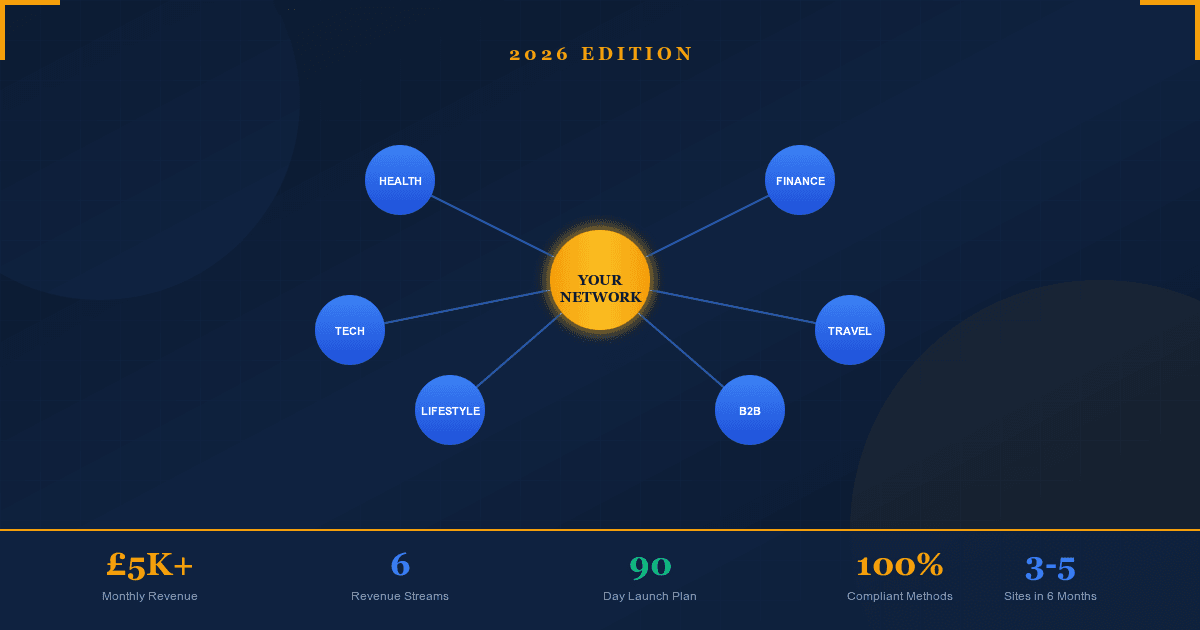
The digital publishing landscape of 2026 presents unprecedented opportunities for entrepreneurs willing to build legitimate, audience-focused content businesses. This guide provides a comprehensive blueprint for creating and operating a Private Publisher Network a portfolio of independent, high-quality niche websites that generate steady income through sponsored content placements, affiliate marketing, display advertising, newsletter sponsorships, and digital products.
What is a Private Publisher Network?
A Private Publisher Network is a collection of independently operated niche websites, each with:
- Real audiences who return for valuable content
- Editorial standards that maintain quality and trust
- Transparent monetisation through clearly disclosed sponsorships and advertising
- Compliant practices that align with search engine guidelines and advertising regulations
Core Business Model
┌─────────────────────────────────────────────────────────────────────┐
│                    PRIVATE PUBLISHER NETWORK                        │
├─────────────────────────────────────────────────────────────────────┤
│  ┌──────────┐  ┌──────────┐  ┌──────────┐  ┌──────────┐           │
│  │ Site A   │  │ Site B   │  │ Site C   │  │ Site D   │  ...      │
│  │ Health   │  │ Finance  │  │ Tech     │  │ Travel   │           │
│  └────┬─────┘  └────┬─────┘  └────┬─────┘  └────┬─────┘           │
│       └─────────────┴──────┬──────┴─────────────┘                   │
│                            │                                        │
│                    REVENUE STREAMS                                  │
│  ┌─────────────────────────┴─────────────────────────┐             │
│  │ • Sponsored Posts (rel="sponsored")               │             │
│  │ • Affiliate Marketing (disclosed)                 │             │
│  │ • Display Advertising                             │             │
│  │ • Newsletter Sponsorships                         │             │
│  │ • Lead Generation                                 │             │
│  │ • Digital Products & Courses                      │             │
│  └───────────────────────────────────────────────────┘             │
└─────────────────────────────────────────────────────────────────────┘
Expected Outcomes
By following this guide, a committed publisher can realistically build:
- 3–5 quality niche sites within 6 months
- £2,000–£5,000 monthly revenue within 12 months
- Diversified income across 4–6 revenue streams
- Sustainable business that grows in value over time
Part One: Foundations
Chapter 1: The Private Publisher Network Model in 2026
Key Takeaways
- A Private Publisher Network is a legitimate media business, not a link scheme
- Each site should serve real audiences with valuable content
- Transparency and compliance are non-negotiable
- The 2026 landscape requires multi-channel thinking
- E-E-A-T principles guide quality standards
Section 1.1: What is a Private Publisher Network?
A Private Publisher Network is a portfolio of independently operated niche websites, each serving a specific audience with valuable content whilst generating revenue through transparent monetisation methods.
Core Characteristics
Real Audiences: Each site attracts genuine visitors who return for valuable content.
Editorial Standards: Each site maintains editorial guidelines covering content accuracy, writing standards, and fact-checking requirements.
Transparent Monetisation: All sponsored content is clearly disclosed. Links in paid placements use appropriate rel attributes (rel="sponsored" or rel="nofollow").
Independent Operation: While you may own multiple sites, each operates independently with its own brand identity and audience.
Compliance Note
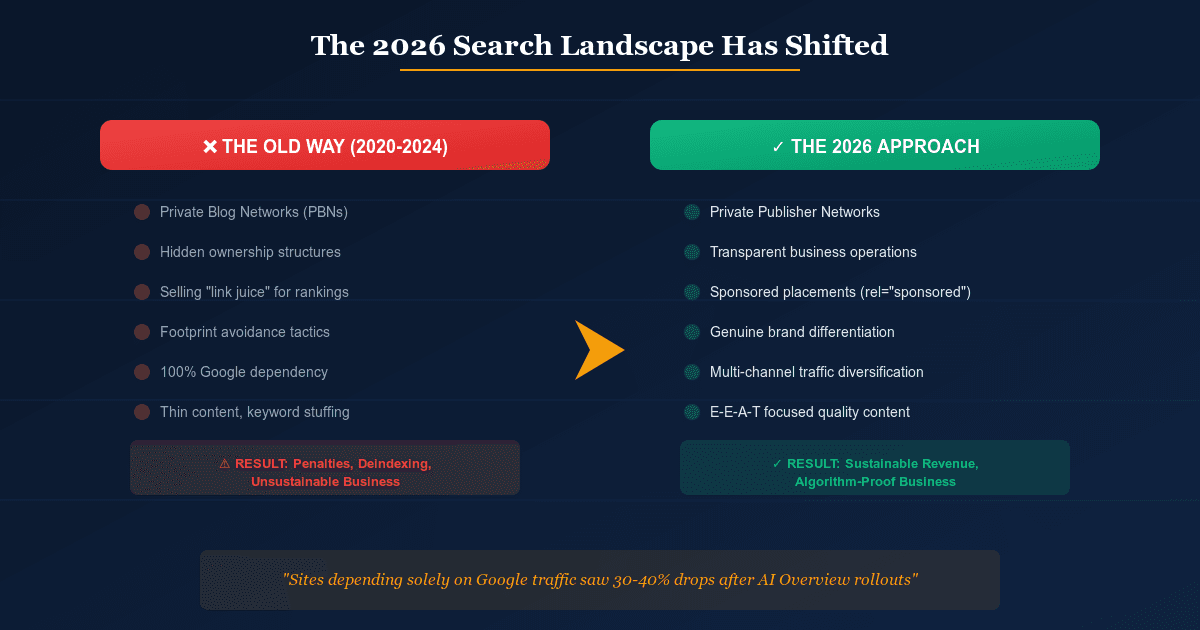
Google's guidelines are clear: sites participating in link schemes buying or selling links for the purpose of manipulating PageRank risk penalties. The compliant approach focuses on selling advertising/sponsorship placements with proper disclosure, not selling "link juice."
What This Model Is NOT
This guide does not teach you to:
- Create sites solely to manipulate search rankings
- Hide ownership or disguise network relationships
- Sell links without proper disclosure
- Use private networks to artificially inflate authority
Section 1.2: The 2026 SEO & Distribution Landscape
AI Overviews & Zero-Click Search
Google's AI Overviews now appear for many informational queries, providing synthesised answers directly in search results:
- Traffic patterns have shifted: Some query types now generate fewer click-throughs
- Brand visibility matters more: Being cited as a source in AI responses builds authority
- Multi-channel presence is essential: Relying solely on Google traffic is increasingly risky
2026 Update
AI-powered search is no longer experimental. Publishers must assume that a significant portion of informational queries will be answered directly in search results. Build direct audience relationships that don't depend on search referrals.
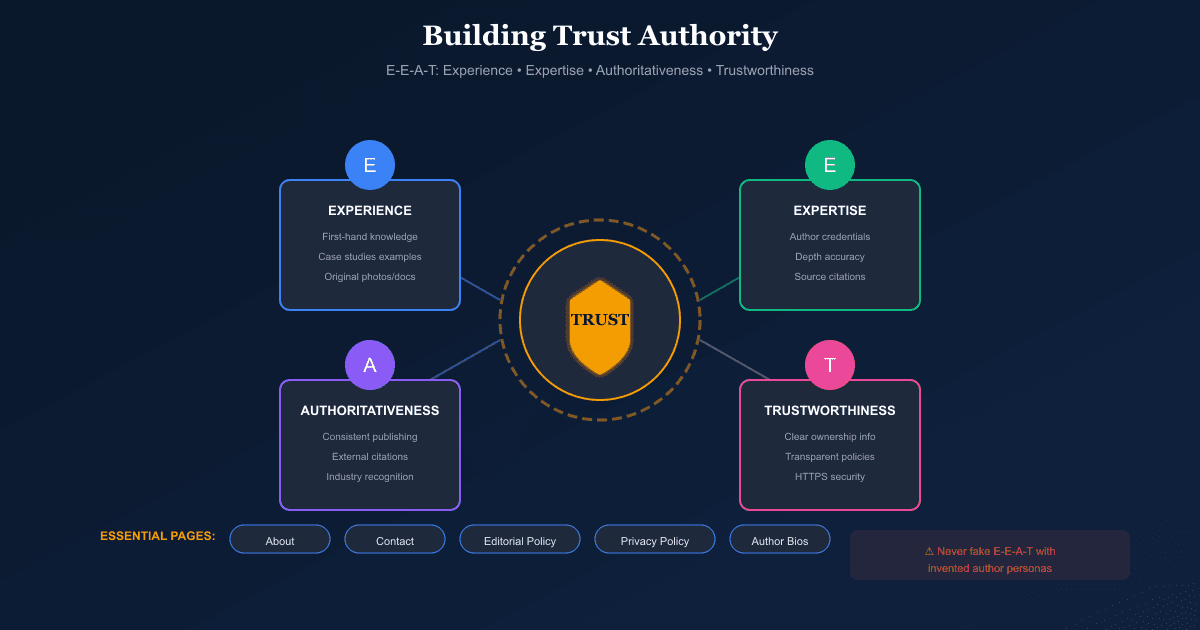
E-E-A-T: Experience, Expertise, Authoritativeness, Trustworthiness
Experience: Content demonstrates first-hand experience with the subject.
Expertise: Content is created by people with genuine knowledge.
Authoritativeness: The site is recognised as a trusted source.
Trustworthiness: Users can trust the site and its content.
Section 1.3: Why Multi-Site Publishing Works
- Risk Distribution: If algorithm changes affect one site, your entire business isn't at risk
- Niche Authority: A focused site can become the definitive resource in a narrow niche
- Diversified Revenue: Different niches have different monetisation potential
- Client Variety: Multi-site network can serve clients across various industries
Pro Tip
Start with one or two sites and build them properly before expanding. It's better to have two thriving sites than ten neglected ones.
Section 1.4: Compliance Framework Overview
Key Compliance Practices
Chapter 1 Checklist
Understand the difference between compliant publishing and manipulative link schemes
Review Google's guidelines on link schemes and sponsored content
Familiarise yourself with advertising disclosure requirements
Assess your understanding of E-E-A-T principles
Consider which niches might suit your interests and expertise
Template: Publisher Network Mission Statement
[NETWORK NAME] MISSION STATEMENT
Purpose:
We build and operate quality niche publications that serve [target audiences]
with valuable content about [topic areas].
Values:
- Editorial Integrity: Clear separation between editorial content and advertising
- Transparency: All commercial relationships are clearly disclosed
- Quality: Every piece of content meets our editorial standards
- Audience First: We prioritise reader value over advertiser interests
- Compliance: We follow all applicable guidelines and regulations
Revenue Model:
We monetise through transparent means including:
- Clearly disclosed sponsored content
- Display advertising
- Disclosed affiliate partnerships
- Newsletter sponsorships
- Digital products
Chapter 2: Understanding the 2026 Digital Landscape
Key Takeaways
- AI-driven search is reshaping how content is discovered
- E-E-A-T principles guide quality
- Multi-channel distribution protects against algorithm volatility
- Building direct audience relationships is essential
- Diversified traffic sources create sustainable businesses
Section 2.1: AI-Driven Search & Discovery
Google AI Overviews
For publishers, this means:
Opportunities:
- Being cited as a source builds authority
- Detailed, expert content is more likely to be referenced
- Unique insights and original research stand out
Challenges:
- Some queries no longer require click-through
- Content must be genuinely valuable, not just keyword-optimised
Section 2.2: E-E-A-T and What It Means for Publishers
Experience
How to demonstrate it:
- Include personal experiences and case studies
- Show actual use of products you review
- Include original photos and documentation
Expertise
How to demonstrate it:
- Author bios with relevant background
- Depth and accuracy in content
- References to relevant sources
Authoritativeness
How to build it:
- Consistent publication of quality content
- Citations and links from other respected sources
- Building reputation over time
Trustworthiness
How to demonstrate it:
- Clear ownership and contact information
- Transparent editorial and advertising policies
- Secure site (HTTPS)
Common Mistake
Some publishers try to fake E-E-A-T signals with invented author personas. This is counterproductive. Build genuine authority instead.
Section 2.3: Multi-Channel Distribution Strategy
No publisher in 2026 should depend entirely on organic search:
Email Newsletter
Direct relationship with readers, no algorithm gatekeeping.
Social Media
Platform-appropriate content distribution.
Community Engagement
Genuine participation in relevant communities.
Section 2.4: Building Visibility Beyond Google
Target Traffic Mix
Pro Tip
Track your traffic sources monthly. A healthy publisher site shouldn't have more than 60% of traffic from any single source.
Template: Traffic Diversification Tracker
MONTHLY TRAFFIC DIVERSIFICATION REPORT

Site: _________________ Month: _________________

Traffic Sources:
┌─────────────────────────────┬──────────┬───────────┐
│ Source                      │ Sessions │ % of Total│
├─────────────────────────────┼──────────┼───────────┤
│ Organic Search (Google)     │          │           │
│ Direct                      │          │           │
│ Email / Newsletter          │          │           │
│ Social                      │          │           │
│ Referral                    │          │           │
│ TOTAL                       │          │ 100%      │
└─────────────────────────────┴──────────┴───────────┘

Diversification Score:
[ ] Healthy: No single source > 50%
[ ] Caution: One source 50-70%
[ ] At Risk: One source > 70%
Chapter 3: Building Compliant, Trustworthy Sites
Key Takeaways
- Trust signals communicate credibility
- Every site needs comprehensive About, Contact, and Policy pages
- Editorial standards differentiate quality publishers
- Transparent disclosure is legally required and ethically essential
- Quality is a competitive advantage
Section 3.1: Trust Signals That Matter
About Page
A comprehensive About page should include:
- Who runs the site: Real names or company information
- Editorial mission: What the site aims to provide
- Contact information: Email, address, or contact form
- Team bios: Real people with real backgrounds
Author Pages
Each contributor should have a profile including:
- Name and bio with relevant background
- Credentials relevant to the topic
- Other work and social profiles
Editorial Policy
Publish clear editorial standards covering:
- Content standards and fact-checking
- Corrections policy
- Independence from advertisers
- How sponsored content is handled
Section 3.2: Transparency & Disclosure Requirements
Sponsored Content Disclosure
Every sponsored article must include clear disclosure:
Placement: At the top of the article, visible before reading begins
Language: Clear, unambiguous terms like:
- "Sponsored Content" or "Sponsored Post"
- "Paid Partnership with [Brand]"
Link attributes: All links in sponsored content should include rel="sponsored"
Sample Disclosure Statement
SPONSORED CONTENT
This article is sponsored by [Brand Name]. [Site Name] received
compensation for this post. All links to [Brand Name] products use
the rel="sponsored" attribute. While we partner with brands we believe offer value, we maintain editorial independence and the opinions expressed are our own.
Template: Editorial Policy
[SITE NAME] EDITORIAL POLICY
Our Mission
[Site Name] provides [description] for [target audience].
Content Standards
All content must meet these standards:
Accuracy: All facts are verified before publication. Statistics include source citations. We distinguish between fact and opinion.
Originality: All content is original. Quotes and borrowed ideas are properly attributed.
Quality: Content is well-researched, clearly written, and provides genuine value to readers. Editorial Independence
- Advertisers do not influence editorial content
- Product reviews are based on genuine assessment
- Commercial relationships are disclosed transparently
- The editorial team has final authority over content
Sponsored Content
- Clearly labelled as "Sponsored" at the top
- Links use rel="sponsored" attribute
- Content must meet our quality standards
- We reserve the right to decline any sponsored content
Last updated: [Date]
Part Two: Network Development
Chapter 4: Niche Selection & Market Research
Key Takeaways
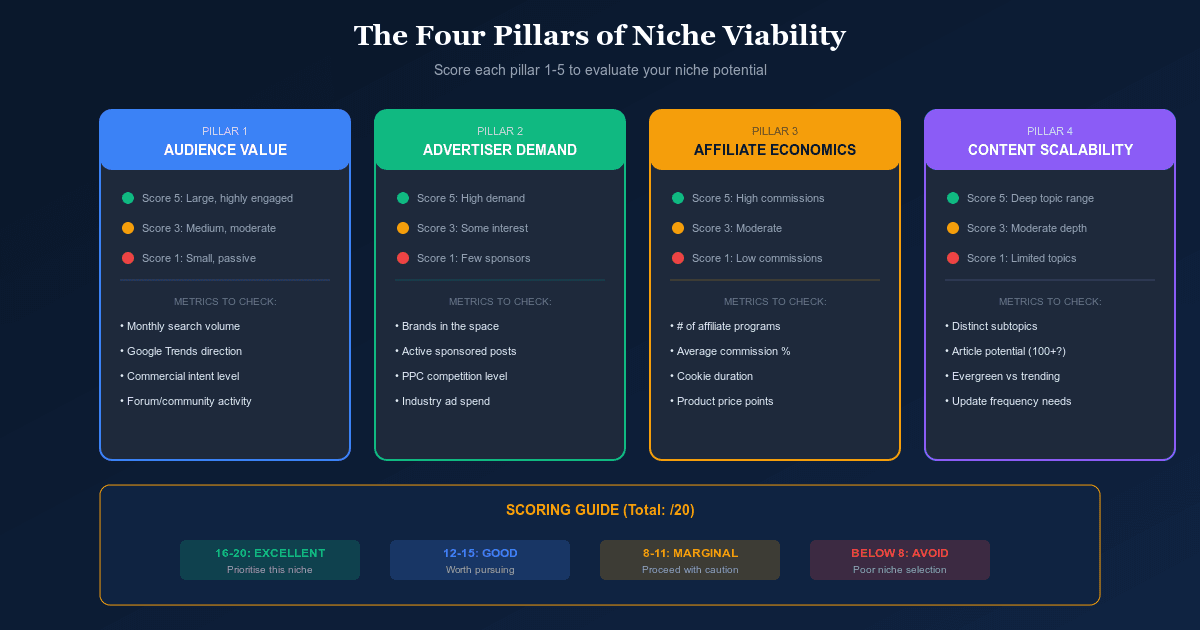
- Evaluate niches across four pillars: audience, advertisers, affiliates, content scalability
- Audience intent determines monetisation potential
- Research advertiser demand before committing
- Content scalability determines long-term growth potential
Section 4.1: Niche Selection Framework
The Four Pillars of Niche Viability
Scoring:
- 16-20: Excellent niche, prioritise
- 12-15: Good niche, worth pursuing
- 8-11: Marginal, proceed with caution
- Below 8: Poor niche, avoid
Common Mistake
Don't select niches based solely on personal interest without market validation. Passion helps, but commercial viability determines success.
Template: Niche Evaluation Scorecard
NICHE EVALUATION SCORECARD
Niche: _________________________________
Date: __________________________________
AUDIENCE VALUE (Score 1-5): ____
Monthly search volume: _____________
Google Trends direction: [ ] Growing [ ] Stable [ ] Declining
Commercial intent level: [ ] High [ ] Medium [ ] Low
ADVERTISER DEMAND (Score 1-5): ____
Potential sponsor brands identified: _____________
Average sponsorship rate (estimated): £_____________
AFFILIATE ECONOMICS (Score 1-5): ____
Number of affiliate programmes: _____________
Average commission rate: _____%
CONTENT SCALABILITY (Score 1-5): ____
Distinct subtopics identified: _____________
Estimated article potential: _____________
TOTAL SCORE: ____ / 20
RECOMMENDATION:
[ ] Pursue as primary niche
[ ] Research further
[ ] Do not pursue
Chapter 5: Domain Acquisition & Site Setup
Key Takeaways
- Domain selection balances brandability and niche relevance
- Technical setup establishes performance foundations
- Professional design builds trust
- Each site should have distinct visual identity
Section 5.1: Technical Setup Checklist
Hosting Selection
WordPress Setup
- Install WordPress (latest version)
- Choose quality, performance-optimised theme
- Essential plugins: Security, Caching, SEO, Backup
- SSL certificate (HTTPS mandatory)
Template: Site Launch Technical Checklist
SITE LAUNCH TECHNICAL CHECKLIST
Domain: _________________________________
Launch Date: _____________________________
Hosting & Domain:
[ ] Domain registered
[ ] SSL certificate installed
[ ] HTTPS redirect enabled
WordPress Core:
[ ] WordPress installed (latest version)
[ ] Admin login secured
[ ] Permalinks configured
Essential Plugins:
[ ] Security plugin
[ ] Caching plugin
[ ] SEO plugin
[ ] Backup plugin
Essential Pages:
[ ] Home page
[ ] About page
[ ] Contact page
[ ] Privacy Policy
[ ] Terms of Service
[ ] Editorial Policy
Performance:
[ ] Page speed tested (target: <3 seconds)
[ ] Mobile responsiveness verified
[ ] Core Web Vitals passing
Chapter 6: Content Strategy & Production
Key Takeaways
- Topical cluster architecture builds comprehensive authority
- Diversified content types serve different needs
- Editorial calendars ensure consistent publishing
- Quality standards must be defined and enforced
Section 6.1: Topical Cluster Architecture
TOPICAL CLUSTER STRUCTURE
                    ┌─────────────────┐
                    │  PILLAR PAGE    │
                    │  (Comprehensive │
                    │   overview)     │
                    └────────┬────────┘
                             │
        ┌────────────────────┼────────────────────┐
        │                    │                    │
   ┌────▼────┐          ┌────▼────┐          ┌───▼─────┐
   │Cluster  │          │Cluster  │          │Cluster  │
   │Content  │          │Content  │          │Content  │
   └─────────┘          └─────────┘          └─────────┘
Pillar Pages
- Length: 3,000-5,000+ words
- Purpose: Establish topical authority
Cluster Content
- Length: 1,500-3,000 words
- Purpose: Deep dive into specific subtopics
Section 6.2: Content Quality Standards
Content Quality Rubric
Publishing threshold: Minimum 18/30 total score
Template: Content Brief
CONTENT BRIEF
Title: _________________________________
Target Keyword: _________________________
Target Word Count: ______________________
Due Date: ______________________________
OBJECTIVE
What should this content accomplish?
________________________________________________
TARGET AUDIENCE
Who is this content for?
________________________________________________
OUTLINE
H1: [Title]
H2: [Section 1]
- Key points to cover
H2: [Section 2]
- Key points to cover
REQUIRED ELEMENTS
[ ] Introduction with clear value proposition
[ ] Internal links to related content
[ ] External links to authoritative sources
[ ] Images/visuals
[ ] Call to action
Part Three: Monetisation
Chapter 7: Sponsored Content & Guest Posting Service
Key Takeaways
- Sponsored content is advertising and must be clearly disclosed
- All paid links require rel="sponsored" attribute
- Define service offerings with clear tiers
- Media kits professionally present your value
- Editorial guidelines maintain quality
Section 7.1: Understanding Sponsored Content
Types of Sponsored Content
Value Proposition for Advertisers
Why brands pay for sponsored content:
- Audience access: Reach your engaged, niche audience
- Credibility transfer: Association with your trusted brand
- Content creation: Professional content they can reference
Section 7.2: Compliance & Disclosure Requirements
Disclosure Requirements
Every sponsored piece must include:
- Clear labelling: "Sponsored," "Paid Partnership," or similar
- Prominent placement: Visible before reading begins
- Advertiser identification: Name the sponsor
- Link attributes: rel="sponsored" on all paid links
Compliance Note
The disclosure must be "clear and conspicuous" obvious to an average reader. Buried disclosures fail this standard.
Link Attribute Implementation
<!-- Correct: Sponsored link with proper attribute -->
<a href="https://sponsor.com" rel="sponsored">Sponsor's Product</a>
<!-- INCORRECT: No attribute on paid link -->
<a href="https://sponsor.com">Sponsor's Product</a>
Section 7.3: Service Tiers
Template: Sponsored Content Media Kit
[SITE NAME] MEDIA KIT
━━━━━━━━━━━━━━━━━━━━━━━━━━━━━━━━━━━━━━━━━━━━━━━━━━━━━
ABOUT [SITE NAME]
[2-3 sentences describing the site and its value for sponsors]
━━━━━━━━━━━━━━━━━━━━━━━━━━━━━━━━━━━━━━━━━━━━━━━━━━━━━
OUR AUDIENCE
Monthly Visitors: _________
Newsletter Subscribers: _________
Social Following: _________
Demographics:
• Age: _________
• Location: _________
• Interests: _________
━━━━━━━━━━━━━━━━━━━━━━━━━━━━━━━━━━━━━━━━━━━━━━━━━━━━━
SPONSORSHIP PACKAGES
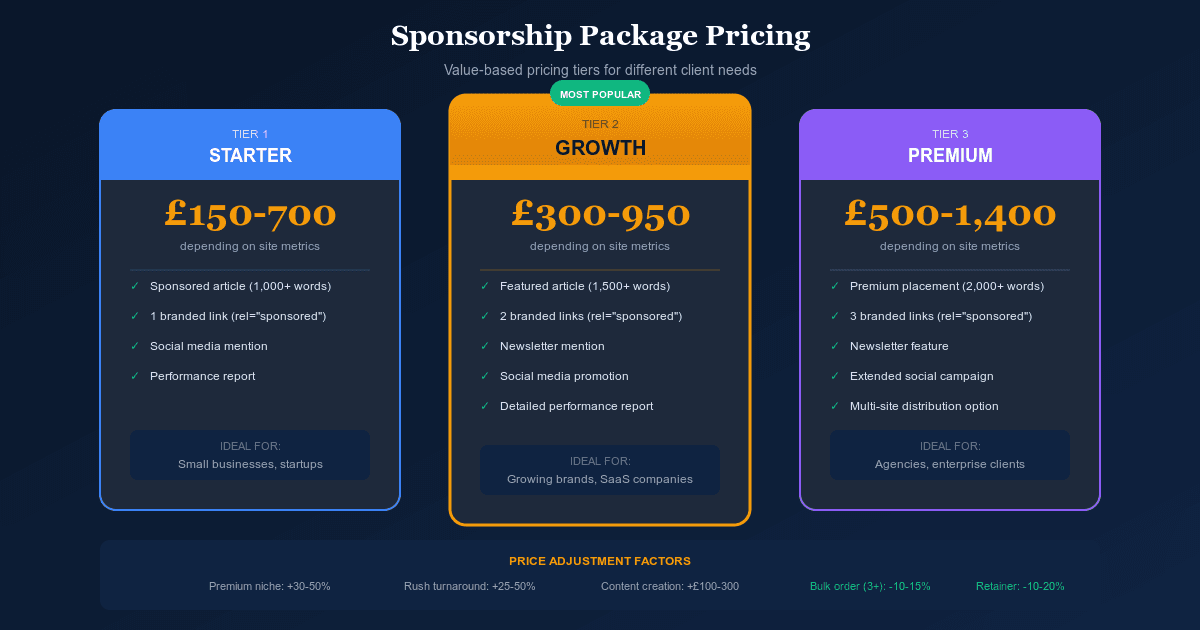
STARTER PACKAGE - £[XXX]
• Sponsored article (1,000+ words)
• 1 branded link (rel="sponsored")
• Social media mention
• Performance report
GROWTH PACKAGE - £[XXX]
• Featured article (1,500+ words)
• 2 branded links (rel="sponsored")
• Newsletter mention
• Social media promotion
• Performance report
PREMIUM PACKAGE - £[XXX]
• Premium placement (2,000+ words)
• 3 branded links (rel="sponsored")
• Newsletter feature
• Extended social campaign
• Detailed performance report
━━━━━━━━━━━━━━━━━━━━━━━━━━━━━━━━━━━━━━━━━━━━━━━━━━━━━
EDITORIAL STANDARDS
All sponsored content must:
• Be clearly labelled as "Sponsored"
• Meet our quality and accuracy standards
• Use rel="sponsored" on all branded links
━━━━━━━━━━━━━━━━━━━━━━━━━━━━━━━━━━━━━━━━━━━━━━━━━━━━━
CONTACT
Email: sponsorships@[sitename].com
Chapter 8: Pricing & Packaging
Key Takeaways
- Price based on value delivered
- Tiered packages serve different needs
- Volume discounts encourage larger orders
- Retainers provide predictable revenue
Section 8.1: Value-Based Pricing Framework
Section 8.2: Package Structures
Pricing Guidance by Site Metrics
Price Adjustment Factors
Section 8.3: Retainer Packages
Template: Pricing Calculator
SPONSORED CONTENT PRICING CALCULATOR
Site: _________________________________
BASELINE METRICS
Domain Authority: _____
Monthly Traffic: _______
Niche Category: _______
BASE RATE: £_______
ADJUSTMENTS
DA premium: £_______
Traffic premium: £_______
Niche premium: £_______
PACKAGE RATES
Starter: £_______
Growth: £_______
Premium: £_______
VOLUME DISCOUNTS
3-5 posts: ___% discount
6+ posts: ___% discount
Monthly retainer (4 posts): £_______
Chapter 9: Client Acquisition & Sales
Key Takeaways
- Diversify client sources
- Personalised outreach outperforms generic templates
- Screen clients for fit
- Hold firm on compliance, flex on commercial terms
Section 9.1: Finding Clients
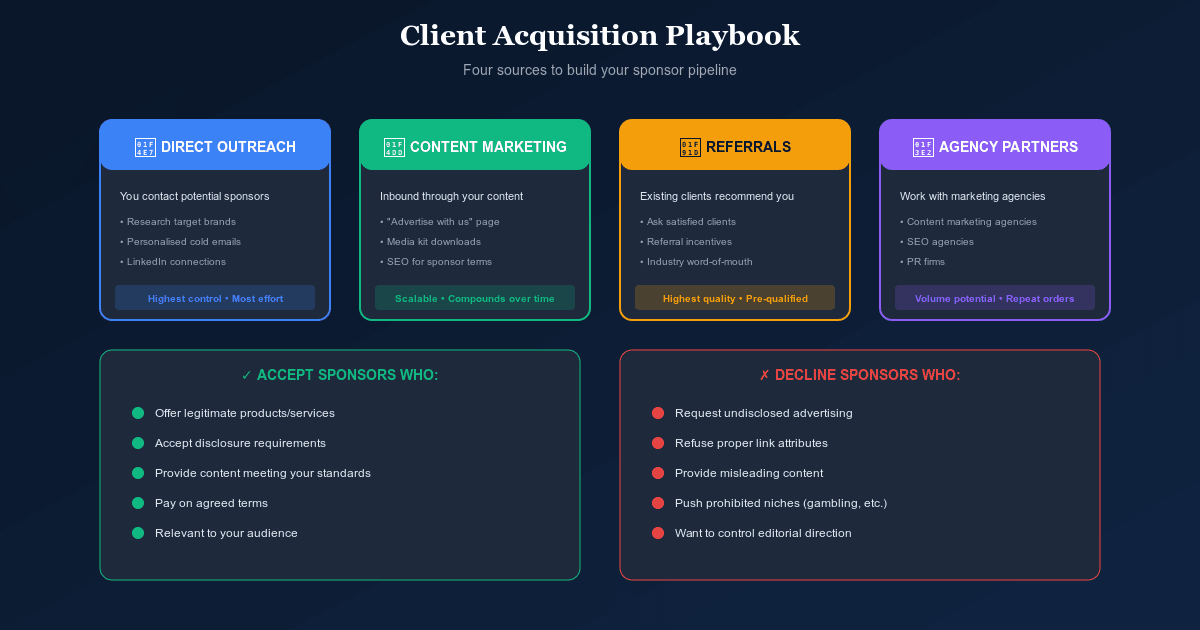
Client Sources
Section 9.2: Outreach Email Template
Subject: Partnership opportunity for [Brand] on [Site Name]
Hi [Name],
I noticed [Brand]'s recent [specific campaign/launch] –
[brief relevant observation showing you've done research].
I run [Site Name], a publication focused on [niche] that reaches
[X] monthly readers interested in [relevant topics].
We offer sponsored content partnerships that help brands reach engaged audiences in this space.
Our typical partnership includes:
• High-quality sponsored article
• Distribution to [X] newsletter subscribers
• Social media promotion
• Full performance reporting
Would you be interested in seeing our media kit?
Best,
[Your name]
Section 9.3: Qualification Criteria
Accept sponsors who:
- Offer legitimate products/services
- Accept disclosure requirements
- Provide content meeting your standards
Decline sponsors who:
- Request undisclosed advertising
- Refuse proper link attributes
- Provide misleading content
Chapter 10: Client Management & Fulfilment
Key Takeaways
- Structured intake prevents misunderstandings
- Clear acceptance criteria protect quality
- Professional publication execution matters
- Honest reporting builds long-term relationships
Section 10.1: Fulfilment Workflow
SPONSORED CONTENT FULFILMENT
STAGE 1: ONBOARDING
├── Contract signed
├── Payment received
├── Brief completed
└── Kickoff confirmed
STAGE 2: CREATION
├── Content creation/receipt
├── Editorial review
├── Revisions if needed
└── Final approval
STAGE 3: PUBLICATION
├── Disclosures verified
├── Link attributes checked
├── Published
└── Client notified
STAGE 4: REPORTING
├── 30-day wait
├── Data collection
├── Report sent
Template: Sponsor Content Brief Form
SPONSORED CONTENT BRIEF
COMPANY INFORMATION
Company Name: _________________________________
Contact Email: _________________________________
Product/Service: _________________________________
CAMPAIGN DETAILS
Campaign Goals:
[ ] Brand awareness
[ ] Product launch
[ ] Traffic to page
[ ] Lead generation
Target Audience: _________________________________
CONTENT DIRECTION
Key Messages:
1. ________________________________________________
2. ________________________________________________
3. ________________________________________________
Tone: [ ] Professional [ ] Conversational [ ] Educational
LINKS & KEYWORDS
Primary Landing Page: _________________________________
Preferred Anchor Text: _________________________________
TIMELINE
Preferred Publication Date: _________________________________
ACKNOWLEDGMENT
By submitting, you confirm:
- Content will be labelled as sponsored
- All links will use rel="sponsored" attribute
Name: _________________ Date: _________________
Chapter 11: Diversified Revenue Streams
Key Takeaways
- Multiple revenue streams create stability
- Affiliate marketing requires honest, disclosed recommendations
- Newsletter sponsorships monetise direct relationships
- Target a balanced revenue mix over time
Section 11.1: Revenue Mix Model
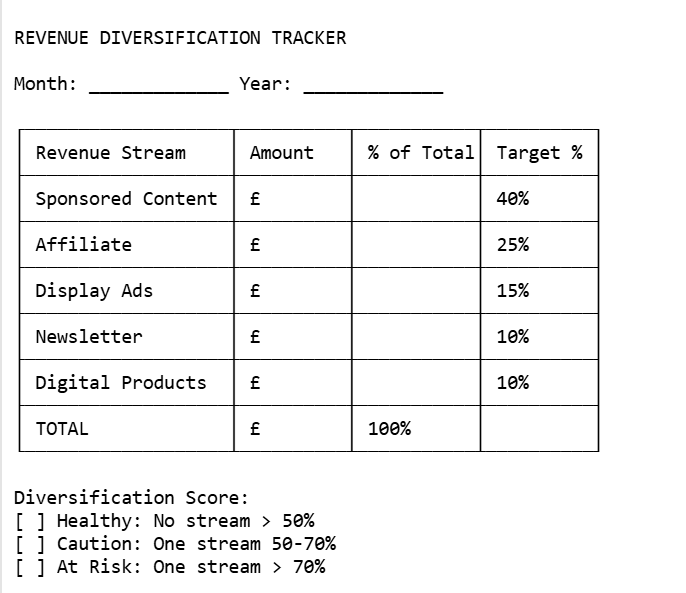
TARGET REVENUE MIX (Established Network)
Sponsored Content: 40%
████████████████████
Affiliate Marketing: 25%
████████████████
Display Advertising: 15%
██████████
Newsletter: 10%
██████
Digital Products: 10%
██████
Section 11.2: Affiliate Best Practices
- Focus on products genuinely useful to your audience
- Write honest reviews, including limitations
- Disclose affiliate relationships clearly
- Use rel="sponsored" on affiliate links
Disclosure Template
AFFILIATE DISCLOSURE
This article contains affiliate links. If you purchase through
these links, we may earn a commission at no additional cost to
you. We only recommend products we believe provide genuine value.
Template: Revenue Diversification Tracker
REVENUE DIVERSIFICATION TRACKER
Part Four: Operations & Scaling
Chapter 12: Operations & Workflows
Key Takeaways
- Document processes for consistency and delegation
- Content production needs systematic management
- Sponsorship fulfilment requires clear tracking
- Tool selection should prioritise scalability
Section 12.1: Content Production Pipeline
CONTENT PRODUCTION PIPELINE
PLANNING (Weekly)
├── Review calendar
├── Assign topics
└── Prepare briefs
CREATION (Ongoing)
├── Research and draft
├── Internal linking
└── Image sourcing
EDITING (48-72 hours)
├── Quality review
├── Fact-checking
├── SEO optimisation
PUBLICATION (Scheduled)
├── Final formatting
├── Schedule post
├── Queue distribution
Section 12.2: Tool Stack Recommendations
Chapter 13: Team Building & Outsourcing
Key Takeaways
- Writers are typically the first hire
- VAs enable focus on high-value work
- Documented processes make delegation possible
Section 13.1: Role Definitions
Writer Compensation Models
Template: Writer Brief
WRITER BRIEF
Assignment: _________________________________
Due Date: __________________________________
ARTICLE DETAILS
Target Keyword: _________________________________
Target Word Count: _________________________________
OBJECTIVE
What should this article accomplish?
________________________________________________
OUTLINE
H1: [Title]
H2: [Section 1] - Points to cover
H2: [Section 2] - Points to cover
REQUIREMENTS
[ ] Include internal links
[ ] Include source citations
[ ] Write meta description
[ ] Follow style guide
Rate: £_______
Payment: Upon approval
Chapter 14: Scaling Your Network
Key Takeaways
- Expand when existing sites are healthy
- New site launches should follow documented process
- Content scaling requires quality protection
- Track growth metrics consistently
Section 14.1: Expansion Readiness
You're ready to add sites when:
- Existing sites generate consistent traffic
- Revenue covers operations with margin
- Processes are documented
- You have capacity or can add it
Wait if:
- Existing sites aren't performing
- Processes aren't documented
- Revenue is unpredictable
Section 14.2: Growth Metrics
Part Five: Risk Management & Sustainability
Chapter 15: Quality Assurance & Editorial Integrity
Key Takeaways
- Quality standards must be defined and enforced
- Screen sponsors to protect reputation
- Maintain editorial independence from advertisers
Section 15.1: Sponsor Screening
Accept sponsors who:
- Offer legitimate products/services
- Have appropriate reputation
- Accept disclosure requirements
Decline sponsors who:
- Sell questionable products
- Request undisclosed advertising
- Refuse proper link attributes
Common Mistake
Accepting any sponsor willing to pay. Short-term revenue isn't worth long-term reputation damage.
Chapter 16: Compliance & Legal Considerations
Key Takeaways
- Advertising disclosure is legally required
- Link attributes are essential for compliance
- Contracts protect both parties
Section 16.1: Required Link Attributes
Compliance Note
Google considers selling links without proper attributes a violation. Always use rel="sponsored" on paid links.
Template: Sponsorship Agreement (Key Terms)
SPONSORED CONTENT AGREEMENT
1. SERVICES
Publisher agrees to publish sponsored content including:
- Sponsored article of [X] words
- [X] branded link(s) with rel="sponsored" attribute
- [Distribution elements as agreed]
2. DISCLOSURE AND COMPLIANCE
- Content will be labelled as "Sponsored Content"
- All branded links will include rel="sponsored" attribute
- Client acknowledges these disclosure requirements
3. LIMITATIONS
Publisher makes no guarantees regarding search rankings or specific traffic outcomes.
4. CANCELLATION
- Before content creation: Full refund
- After draft delivery: No refund
Chapter 17: Risk Management & Reputation
Key Takeaways
- Prepare for traffic volatility
- Algorithm updates reward quality fundamentals
- Handle client conflicts professionally
- Clear refund policies prevent disputes
Section 17.1: Traffic Drop Response
TRAFFIC DROP RESPONSE
IMMEDIATE (Day 1-2)
├── Verify drop in analytics
├── Check for technical issues
├── Check for algorithm updates
ANALYSIS (Day 3-7)
├── Identify affected pages
├── Review Search Console
├── Assess competition
RESPONSE (Week 2+)
├── Address technical issues
├── Improve content quality
├── Diversify traffic sources
Section 17.2: Algorithm-Proof Practices
Focus on fundamentals that survive updates:
- Quality content that serves user needs
- Genuine expertise in your topics
- Transparent practices that don't rely on tricks
- Audience relationships beyond search traffic
- Diversified traffic sources
Pro Tip
The best algorithm protection is building sites you'd be proud of regardless of rankings.
Chapter 18: Future-Proofing Your Network
Key Takeaways
- Stay informed about industry changes
- Use AI responsibly to enhance operations
- Build lasting asset value, not just income
- Consider eventual exit in current decisions
Section 18.1: Asset Value Factors
Part Six: Implementation
Chapter 19: Your 90-Day Launch Plan
Phase 1: Foundation (Days 1–30)
Week 1: Planning & Niche Selection
[ ] Complete niche evaluation for 3-5 options
[ ] Select primary niche
[ ] Research competitors
Week 2: Domain & Technical Setup
[ ] Acquire domain
[ ] Set up hosting and WordPress
[ ] Configure theme and plugins
Week 3: Foundational Pages
[ ] Write About page
[ ] Write Privacy Policy
[ ] Write Editorial Policy
[ ] Design homepage
Week 4: Content Planning
[ ] Map topical clusters
[ ] Create topic list (50+ topics)
[ ] Begin first content pieces
Phase 2: Build (Days 31–60)
Week 5-6: Content Creation
[ ] Publish 10-15 foundation articles
[ ] Create 1-2 pillar pages
[ ] Establish writing routine
Week 7-8: Audience Building
[ ] Set up email capture
[ ] Create lead magnet
[ ] Establish social presence
[ ] Begin community engagement
Phase 3: Launch (Days 61–90)
Week 9: Monetisation Preparation
[ ] Create media kit
[ ] Develop sponsorship packages
[ ] Draft sponsor brief form
[ ] Create outreach templates
[ ] Join affiliate programmes
Week 10: Service Launch
[ ] Implement display ads
[ ] Publish affiliate content
[ ] Begin sponsor outreach
Week 11-12: First Clients
[ ] Continue outreach
[ ] Close first sponsor
[ ] Fulfil first order
Success Milestones
30-Day Targets
- Site live with essential pages
- 5+ articles published
- Technical checks passed
60-Day Targets
- 20+ articles published
- 50+ email subscribers
- 500+ monthly visitors
90-Day Targets
- 35+ articles published
- 200+ email subscribers
- 2,000+ monthly visitors
- First sponsor closed
Ongoing Management Routines
Weekly (2-3 hours)
- Publish scheduled content
- Review performance metrics
- Outreach follow-ups
- Community engagement
Monthly (4-6 hours)
- Traffic and revenue review
- Content performance analysis
- Newsletter to full list
- Prospect list refresh
Appendices
Appendix A: Tool Recommendations
Appendix B: Glossary
DA (Domain Authority): Metric predicting how well a site will rank.
E-E-A-T: Experience, Expertise, Authoritativeness, Trustworthiness.
Pillar Page: Comprehensive page covering a broad topic.
rel="sponsored": HTML attribute indicating a paid link.
Topical Cluster: Content organised around a central topic.
Final Thoughts
Building a Private Publisher Network is a legitimate business that rewards those who commit to quality, transparency, and genuine audience service.
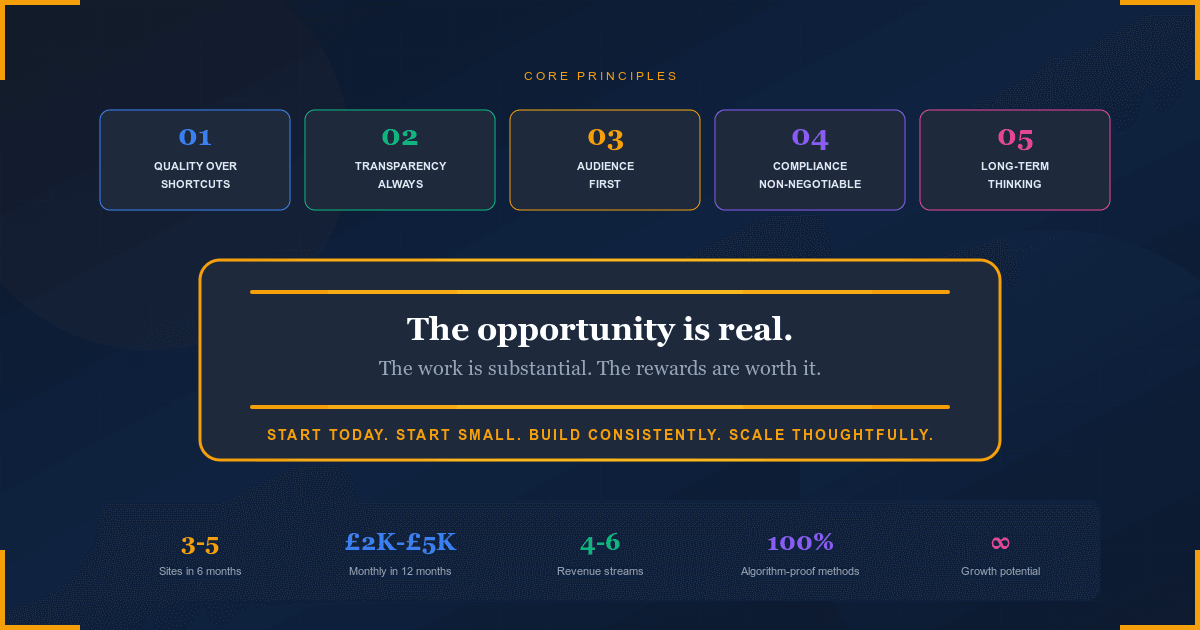
Core principles:
- Quality over shortcuts: Build sites you'd be proud of
- Transparency always: Disclose all commercial relationships
- Audience first: Serve readers, not just advertisers
- Compliance is non-negotiable: Follow all guidelines
- Long-term thinking: Build assets, not just income
The opportunity is real. The work is substantial. The rewards are worth the effort.
Start today. Start small. Build consistently. Scale thoughtfully.
© 2026 Edition
This guide provides general business information. It is not legal, financial, or professional advice. Consult appropriate professionals for specific situations. *By Kasun Sameera
Author Profile

Kasun Sameera
Kasun Sameera is a seasoned IT expert, enthusiastic tech blogger, and Co-Founder of SeekaHost, committed to exploring the revolutionary impact of artificial intelligence and cutting-edge technologies. Through engaging articles, practical tutorials, and in-depth analysis, Kasun strives to simplify intricate tech topics for everyone. When not writing, coding, or driving projects at SeekaHost, Kasun is immersed in the latest AI innovations or offering valuable career guidance to aspiring IT professionals. Follow Kasun on LinkedIn or X for the latest insights!

